
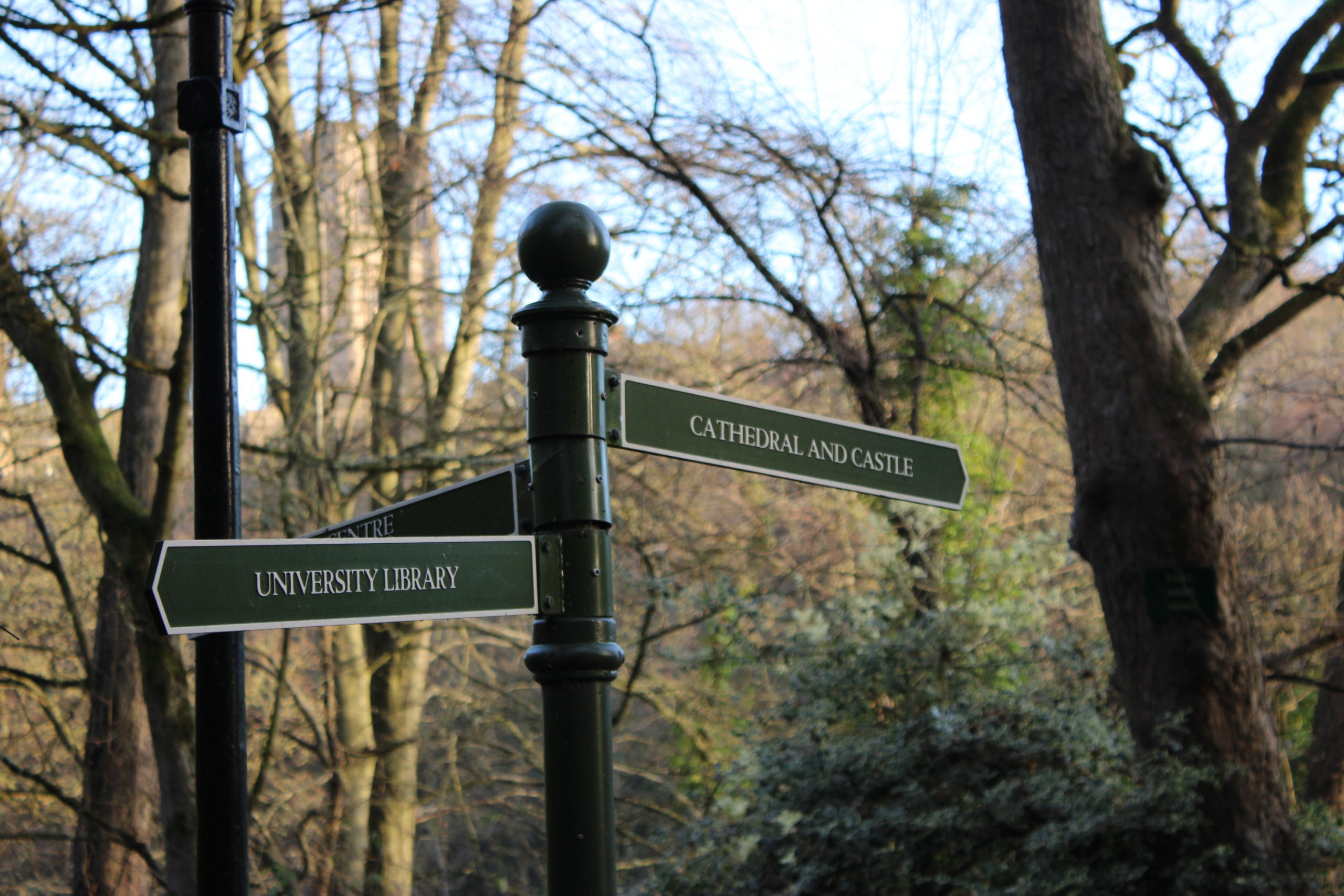
The crunch of crisp sunset leaves under your feet. The bite of the wind on your cheeks. The booming chimes of the Cathedral bell tower. This is Durham in the Autumn. For most of us, this time of year feels at once starkly different and eerily similar: first days of school, a new timetable, nerves about who you will sit next to in your new classes. But this time, there are no parents or guardians waking you up in the morning, no threat of discipline if you don’t complete your assignments or run late. For the first time, your life, and what you choose do with it, is entirely up to you.
For many of us, we dream our whole lives of flying the nest, of freedom, independence, and creating a life that is wholly your own. And yet, when you finally get there, it’s not quite how you pictured it. There’s that something, isn’t there? That lingering feeling in your chest, a fissure in your rose-tinted reality. A sadness, a melancholy that clouds your perspective, like the mist that rolls over the River Wear on frosty mornings. For me, it’s in the liminal moments between sleeping and waking in the morning, a heartbeat where I think I’m back in my hometown, my parents waiting for me downstairs, my dogs curled up at the foot of my bed. In other words, nostalgia. That moment when you’re about to set off on a new adventure, and you’re so excited, but you stop as you’re about to turn the corner, and you look back. And just for that moment, you suddenly wish you didn’t have to go.
When we think of the future, it’s easy to focus on all of the potential, all of the possibilities. And yet, when the time comes, change of all kinds, even that which is decidedly good, seems to make us long a little for the life we left behind.
So, the question is, why does change, even that which we’ve worked for and dreamed of and wanted so badly, make us wish for things to go back to the way they were? Why does growing up make us so desperate to stay young?
I would argue that it’s because in the past, you can find certainty: it’s already happened. The safety is assured. You don’t have to worry about the unknown, and it’s in these transitory periods that we instinctually cling to stability.
This may all sound quite negative, but this is a good fear, the kind that you feel when you know that something amazing might happen, but the risk that it won’t is still terrifying. Often, the best things in life come from letting go of the safety net of nostalgia, and challenging yourself to try something new, even if it scares you.
Disney’s 1953 animated film ‘Peter Pan’ opens with the line ‘All this has happened before. And it will all happen again.’. Walking up Church Street to my lectures, strolling along the cobbles of Saddler Street and watching the rowing boats pass by below Kingsgate Bridge, these lines echo in my head. This city is steeped in stories, the history of those who came before. The narrator’s sentiment doesn’t just apply to your experience as a Durham student, but to every new beginning you’ve ever had. Nostalgia likes to make you think that your past was perfect, but that’s not true, is it? Back then, there were times when you felt scared or anxious or stressed, but you barely remember that now. What you do remember, is all the good that came from overcoming that fear. It’s easy to forget that we’ve all lived through first days, met new people, tried new things. That the hobbies and the people that are now essential parts of your everyday were once things you were afraid of, too.
So yes, change does force you to grow up. But growth isn’t a fixed state, and it’s definitely not a linear path from A to B. Whether it’s moving schools, moving out, or trying something new from the Chapters’ cake display (I recommend the red velvet), we are constantly evolving. The nostalgia that follows us isn’t a bad thing, it’s simply a reminder of all of the versions of ourselves that we have once been. We shouldn’t be scared to grow and change or become someone new, because we have done it before, and we will do it again.
Peter Pan isn’t wrong; growing up is scary, and independence is intimidating. But I’d argue that the life beyond childhood is worth overcoming those fears. This time last year I couldn’t imagine ever feeling at home here in Durham, and now I miss it every time I go back to my hometown. The film’s message is about how staying young forever isn’t as fun as it seems, and that perpetual childhood isn’t worth the sacrifice of missing out on everything else life has to offer. But it does provide a different message, one that I think is even more important: the fantasy is never as perfect as you think it will be. But sometimes, real life is even better.