
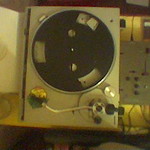
DJ Kool Herc, one of the ‘three kings’ of early-day hip-hop, pioneered the key technology of DJ club music such as the iconic turntable and record mixer. He transported Jamaican culture all the way to the New York Bronx in the ‘booming bass [,] dub sound [and classic] custom of “toasting” or talking over records’, and is thought by some to be the godfather of classic club pop and hip-hop. Herc has undoubtedly inspired the many various permutations of club music we hear today.
A few decades later another icon of the ever-evolving Disco scene was born, DJ Larry Levan, whose distinct lack of technical prowess forced him to develop an influential freeform style of record selection. Levan has been accredited with founding the ‘dub aesthetic into dance [by post-disco DJ Francois Kevorkiam]’. His classic experimentation with the electronic disco sound (via drum machines, synthesisers, integrating instrumentals etc) are thought by some to be the modern foreground of house music. Anthony Malloy, an aspiring singer and producer of hit ‘86 song “What I Like”, claims this burgeoning new musical movement “felt like a conspiracy […], like a movement, but a movement we were pulling the strings of”.
Boyd Jarvis, while providing ‘killer synth basslines’ and ‘live overdubs for sets by Timmy Regisford and Kenny Carpenter’, stumbled upon the record that would inspire the House genre, ‘The Music Got Me’, which Malloy performed backing vocals for. This record and its ‘restless rhythm, relentless synth bassline and cascading melody’ was an initial experimentation into the genre that would come to define the 2010s New York party scene.
A key distinguisher from other genres of the now 90s clubbing scene was the introduction of soulful and vocally playful ad-libs onto heavy instrumentals and beats. Producer Tony Humphries claims ‘it was like listening to a minister ina gospel church’.
As the genre became more mainstream, more and more producers tried to dominate the raw and unfinished feel of many tracks, in the pursuit of ‘polished, radio-friendly productions’ which would be more easily marketed, which was heavily resisted by the minimalist instrumentalists pioneering the movement.
These stripped-back tracks from Jarvis made the masses believe they too could replicate this sound, conveniently at home, thus leading to the birth of ‘House’, with its categoric low-effort and impressively catchy simplistic style.
In the 2000s, House was transformed into an instantly recognisable and distinct genre, ‘reflecting the zeitgeist of an era of innovation and a newfound digital interconnectedness [as the millennium turned]’. The rise of digital technologies & platforms and ever-multiplying genres blended together to make a unique new mainstream sound. Digital platforms like ‘MySpace, SoundCloud, and Beatport’ bypassed ‘traditional music industry gatekeepers’ and provided new artists with an attentive, globalised audience.
Tech House became particularly prominent, with new French duo ‘Daft Punk’ balancing classic house and futuristic soundbites into their tracks. Tech House rejected mentalist, high-tempo rave music and the oppositional ‘beige, sunny, lightweight’ house-mimicry of ‘handbag’ house. It was a new underground scene that dominated appropriated ‘repurposed industrial spaces, [and] studios’. Inevitably, this newfound sound was noticed by producers, who attempted to replicate the often gritty and ‘tribal percussion’ of tech-house. By ‘copying basic tropes’, producers simplified the sound into a more ‘tightly prescribed [one]’ that ignored the more unique aspects of the sub-genre.
By the 2010s, this new streamlined sound was highly popular in the many clubs of key party scenes like Ibiza, and it hasn’t slowed down since. Still highly popular and arguably inextricable from the heart of clubbing, many students will recognise these classic tracks. House continues to evolve as it conjoins new and upcoming subgenres and blends them with its ‘structural genre integrity’, making it some unbeatable super-genre of kinds.
Image Credits: Daniel O’Connor via Flickr