

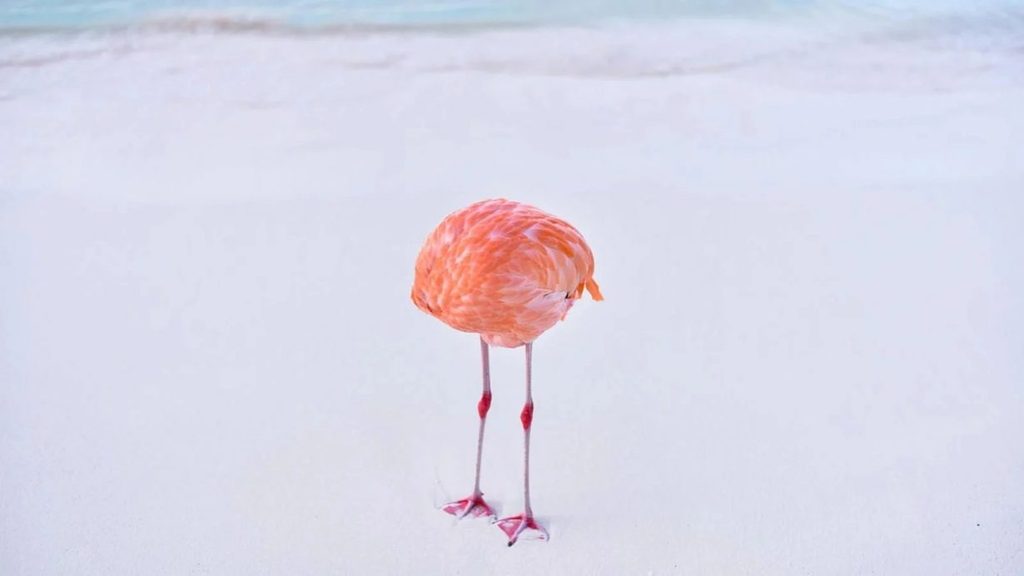
Take a close look at the two images above: One is a real photograph, and the other was made by AI.
Can you tell which is which? Comment your guess below before you keep reading.
Three years ago, Boris Eldagsen entered the creative category of the Sony Photography Awards with an AI-generated photo which was also edited using AI 20–40 times, and he actually won. He walked on stage at the ceremony, uninvited, and declared that he was turning down the award because AI is not photography. He wanted to spark a debate about the consequences of AI’s rapid adoption in creative spaces, especially image creation.
In 2024, Miles Astray entered a real photo into the AI category of the 1839 Awards and won. The image was a flamingo with its head buried so deep into its body that the image looked unreal. He had read about scenarios of artists passing off AI as real art (e.g., Boris Eldagsen passing off AI as a real photograph in 2023) and wanted to pass on his own message that nature outdoes machines.
If you guessed that the vintage woman is the AI image and the flamingo is the real photo, you are correct. It’s okay if you got it wrong. The judges did too.
I find the two scenarios both frightening and hilarious. In the space of a year, expert judges gave a photography prize to a picture that had no camera involvement in its creation, and then another set of judges disqualified a real photo for not being fake enough. If the professionals were not able to tell the difference between a real photograph and an AI-generated image, what chance does your aunty in the family WhatsApp group have?
The worry is that soon, nobody will know what is real.
Governments carry a huge burden of this worry because society runs on trust. They have started forcing companies to label their AI.
The AI labelling rulebook so far
- China, 2023: Providers are required to add labels to deep-synthesis content that could confuse or mislead the public to prevent deepfakes and protect public interests.
- China, 2025: Both visible labels and invisible metadata on AI-generated content are required so audiences can see it and regulators can trace responsibility.
- EU, 2026: Providers must embed machine-readable markings in synthetic content so it is detectable as AI-generated. Non-compliance may attract fines up to €15 million or 3% of worldwide turnover.
- South Korea, 2026: Providers must add watermarks to AI-generated content as a “minimum safeguard” against deepfake abuse.
- UK, 2026: A government task force on labelling AI-generated content was established in summer 2026 to examine whether and how AI-generated content should be labelled.
- US (California), 2026: Covered providers, i.e., providers with over 1 million monthly users, must offer a free AI detection tool and provide manifest/latent disclosures for AI-generated image, video, and audio content.
AI giants tend to portray themselves as cooperating with the government and regulatory bodies after these regulations are announced, but in reality, engineering only got serious when a compliance deadline with a fine attached was established.
Amazon, Anthropic, Google, Inflection, Meta, Microsoft, and OpenAI made a pledge to the US federal government in July 2023 that they would work on developing AI watermarks as safeguards. The promise was made because the Biden administration wanted voluntary safeguards on AI development.
Google DeepMind shipped something real first. It was called SynthID, and it arrived in August 2023. It hides a mark in the pixels of an AI image, and only a detector can see it. But independent testing found SynthID-Text degrades under heavy paraphrasing, back-translation, and copy-paste edits. Meta’s attempt went badly too. When the software rolled out in May 2024, it tagged real photos as AI. And in March 2025, Anthropic quietly removed the voluntary watermarking commitments it had made to the Biden White House in 2023 from its own website.
Then the EU rules kicked in during August 2026, and the pace changed. Anthropic put an invisible watermark in Claude’s text. OpenAI did the same for ChatGPT in the EU that October. Google also opened its SynthID Detector to everyone in October, and it checks images, video, and audio made with tools from Google, OpenAI, NVIDIA, and Kakao.
How do AI watermarks work?
The output embeds a signal that can only be found by detectors. The embedded signal manifests as very tiny pixel changes in pictures, high-frequency sounds that can’t be heard by the human ear in audio, and patterns in the word choices for texts.
Editing wears the watermarks down, and a rewrite or remake removes them completely. A file without a watermark should not automatically be assumed to be created by a human. Also, while a watermark can tell you a machine was involved, it can’t tell you whose idea it really was.
Technology alone is not going to save us from deepfakes. We also have to train our own eyes.
So, let’s make a habit of it.
Every two weeks, I’m going to post a new set of images and ask you to be the judge: Real or AI?
Image credits: “Pseudomnesia: The Electrician” by Boris Eldagsen (2023) | “Flamingone” by Miles Astray (2022).
