
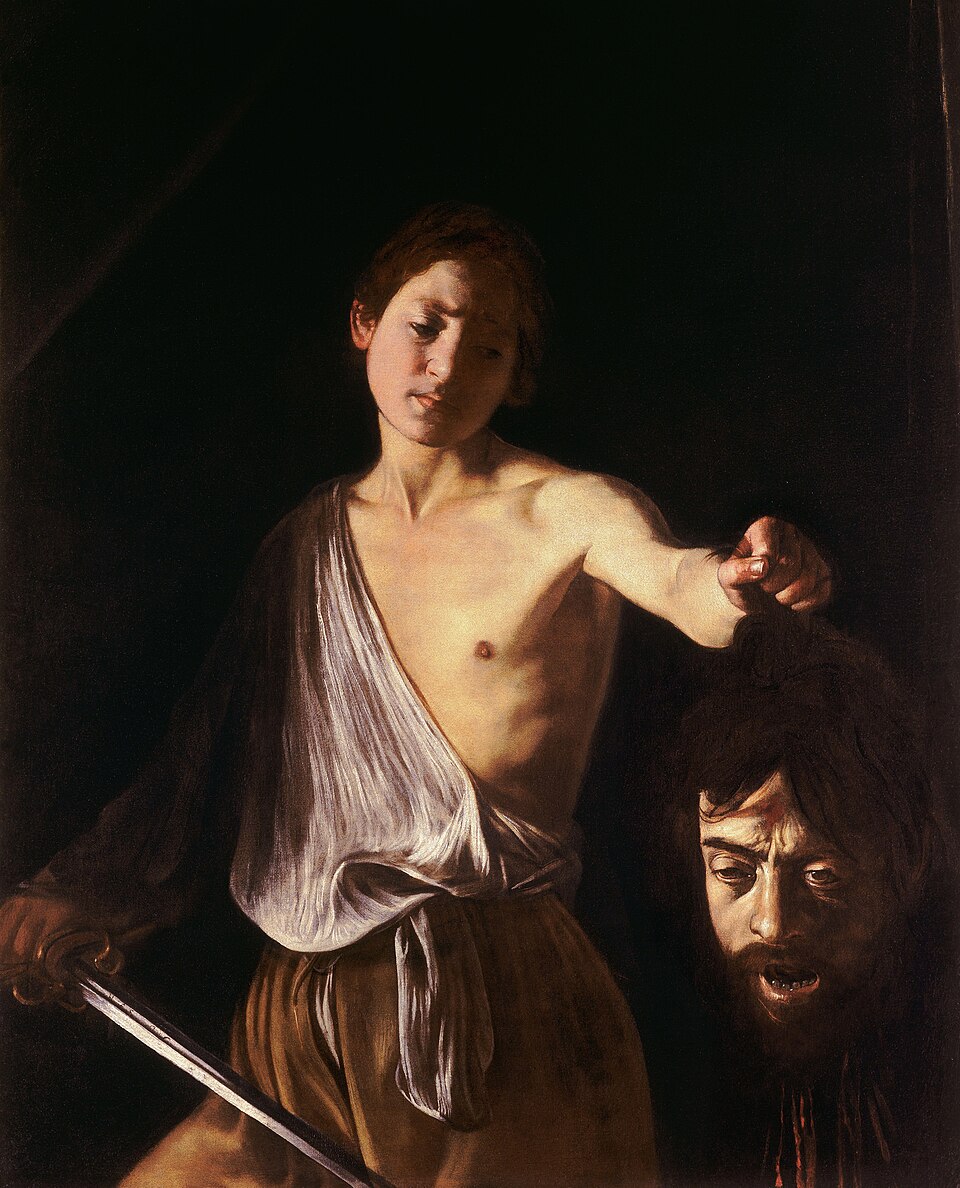
In May 1606, Caravaggio killed a man in Rome and fled the city with a price on his head. Over the next four years, on the run, he painted some of the most tender, devout pictures in European art. Today we queue for hours to stand in front of them. Nobody asks to see his criminal record at the door. So what, exactly, are we doing when we look?
We do what we have always done. We tell ourselves to separate ‘the art from the artist’, and then we get on with enjoying it. It is an age-old debate, and it usually ends the same way. Caravaggio is hardly the only artist who needs that trick. Gauguin left his wife and children in Europe for Tahiti, where he took teenage girls as partners and painted them in glowing colour. Picasso’s cruelty to the women who loved him is so well documented that Françoise Gilot, who left him in 1953, wrote a memoir about it, and he tried to stop it being published. Many of you probably own one of these men already, on a postcard, a poster or a tote bag. The question is not whether we have a problem. It is what, if anything, we plan to do about it.
What do we do with great art made by bad people? It is the question at the heart of Claire Dederer’s book Monsters, and the opinions are torn. Some argue that we should judge the work itself, and that an artist’s personal life has little bearing on whether it is worth appreciating. Others say that distinction is impossible. They may be right. The idea that bad character stays out of the work, leaving us to admire it in blissful ignorance, doesn’t quite hold up.
Take Picasso. Do you see misogyny in his work? Perhaps not immediately. Look again. In the Weeping Woman of 1937, created in the aftermath of Guernica, Picasso turns Dora Maar into an image of almost unbearable grief. The jagged shapes around her mouth and hands distort her face into something close to a grotesque mask. The paintings are often read as symbols of the suffering caused by war. But knowing how Picasso treated Maar makes it harder to ignore another possible reading: a woman whose identity is repeatedly reduced to her pain. His work is still revered as a radical breakthrough in modernism, and rightly so. But does recognising that achievement mean we should overlook the attitudes that shaped it? Art is not created in a vacuum. The person behind the canvas matters, even when we would rather it didn’t.
Part of the problem is that we don’t particularly want to know. Art is personal. We attach memories, emotions and sometimes entire identities to the things we admire, and a painting we have loved for years doesn’t become less beautiful because of something unpleasant we learn about its maker. That is exactly why we are so quick to separate the two. It’s easier to enjoy a piece of art when we don’t have to think too hard about the person behind it. We protect the art, but we also protect our own enjoyment.
Yet some artists are forgiven more easily than others. Why does Caravaggio feel so much safer to admire than someone whose misconduct was in the headlines this morning? Take Rolf Harris. After his conviction in 2014, his portrait of Queen Elizabeth II disappeared from view, and its whereabouts are now unknown. Caravaggio, meanwhile, remains one of the most celebrated painters in European history. Is that because one man’s actions are somehow more forgivable? Or simply because four hundred years have passed? Time softens even the most uncomfortable reputations. The scandal becomes a footnote, the violence an anecdote, and the artist eventually just a name in a textbook. Perhaps we aren’t more forgiving of the dead. We have just forgotten enough to enjoy their work.
The debate gets harder when the allegations are recent. In 2018, the National Gallery of Art in Washington postponed exhibitions by the artist Chuck Close and the photographer Thomas Roma indefinitely after allegations of sexual misconduct. Close apologised to the women he had made uncomfortable, while also saying the allegations were not true. Roma’s lawyer disputed that his behaviour was ever coercive, and he retired from Columbia University the day after the story broke. Other institutions followed the gallery’s lead. Seattle University removed a prominent Close self-portrait. Close died in 2021.
Suddenly the question is no longer just whether we can appreciate a painting despite its creator’s behaviour. It is whether continuing to exhibit, buy and promote someone’s work also means continuing to support them. There is a difference between looking at a painting by someone who died centuries ago and contributing to the career of someone whose actions are still being questioned.
Museums are working this out in real time. When Amsterdam’s Rijksmuseum began replacing offensive terms in the titles of its artworks in 2015, it kept the original wording on record and was still accused of censorship. That row was about language rather than artists’ conduct, but the lesson carries over: change the context, not the work, and expect an argument whichever way you go. Hang a difficult artist without comment and you are accused of ignoring the problem. Take the work down and you are accused of rewriting history. There is no neutral answer.
None of this means we should erase problematic artists from history. We cannot pretend their work never existed, nor ignore their influence on the art we see today. But preserving someone’s work does not mean preserving their reputation unquestioned. We can recognise artistic achievement without turning the person responsible into a hero. Perhaps the problem has never been that we enjoy art made by terrible people. It is that we have grown so used to admiring them that we rarely ask why. We don’t have to stop looking at Caravaggio. We don’t have to pretend Picasso wasn’t influential. But we should be more critical about how we celebrate them, how museums present them, and the stories we choose to tell about their lives.
So can you hang a monster on your wall? Perhaps. But you should at least know whose face you are looking at.
Feature Image: Caravaggio, David with the Head of Goliath, c. 1609-10. Galleria Borghese, Rome. Image: Wikimedia Commons (public domain).