
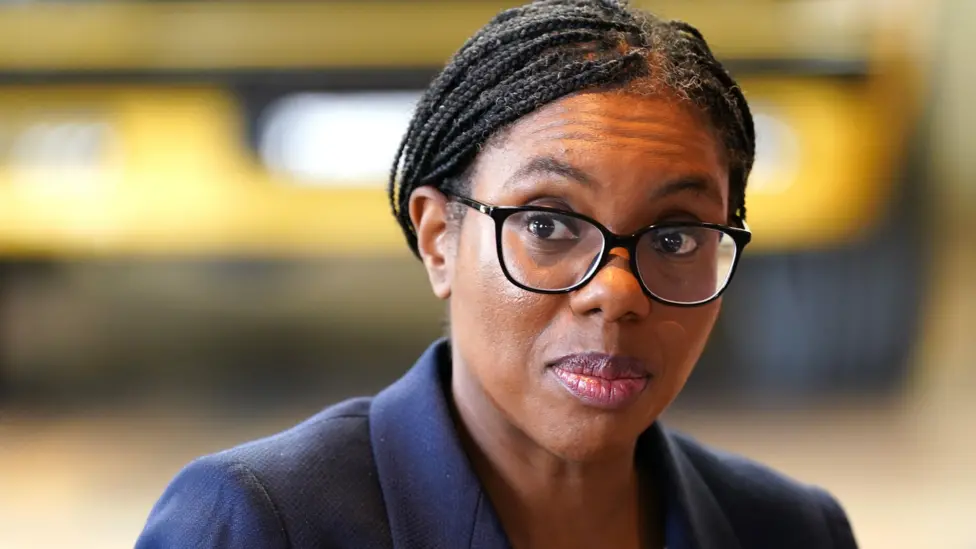
Speaking in the early afternoon of last Tuesday, Kemi Badenoch, top boss of the Conservative Party, announced a proposed £36 billion in spending cuts from the ever-relevant welfare bill. In an effort to defend this indiscriminate slash to working-class families, she added the rather thoughtful, kind and down-to-earth comment, “Double amputees run marathons!”
Whilst many of us are not marathon-running double amputees, it can be said that the general population sympathises with the struggles faced by those with long-term illness and those suffering from mental health conditions. The Tories have, however, taken it upon themselves to exclude themselves from this criteria – with Badenoch announcing this would be where the largest cuts take place. £13.7 billion would come from these proposed sickness and disability reforms, including removing payments for “mild” mental health conditions. Badenoch supposedly argues that disability benefits for young people with ADHD and autism are likely to be more destructive to their future than the condition itself. Do not worry, dear reader; I am sure you would be forgiven for thinking twice about why it should be the famously humble Conservative Party that gets to govern what constitutes a “mild” mental health condition – or perhaps considering why it is that poor, working-class families should not receive financial aid to help pay for new clothes when their autistic child develops new sensory issues. A study by the NIH found that sensory issues are an ever-developing problem throughout a child’s life, an issue that requires a parent to bear the burden of new clothes every other month because their child has developed a disdain for the fabric of a particular item.
Continuing with her theme of generosity, Badenoch proposed to reinstate the two-child benefit cap, which the Tories say would save £3.1 billion a year. However, the Child Poverty Action Group claimed this could lead to the largest overnight increase in child poverty since records began. Labour attacked Badenoch’s plan, calling it a “charter for human misery”, with cuts to housing benefits naturally leading to a rise in homelessness and rough sleeping, the exact issue Prime Minister Andy Burnham vowed to end in his inaugural speech earlier this year. A rise in homelessness may cause further costs through plans aimed at tackling the newly worsened issue, were Badenoch able to implement such procedures.
Now, when considering the welfare bill, one must acknowledge the fact that it has definitely risen substantially and will continue to do so, with the current cost being £353 billion a year, and the OBR forecasts this may rise to £431 billion by 2031-32. Reform, the verb – not the racists, certainly – matters in this aspect; it is a clear issue and must change. However, this cannot come at the cost of working families who work diligently to raise their children despite their mental or physical disabilities. It must come through employment support and evidence-led reviews rather than the ridiculous suggestions made by an out-of-touch Tory. The Alan Milburn Report is due within days, which is said to shed new light on how this government can tackle problems affecting the welfare budget, such as youth unemployment.
Badenoch has received substantial uproar from both the Labour Party and the right-wing Reform UK Party through Robert Jenrick, who claimed that the Tories have left more people on long-term benefits than Labour (despite the fact that he was once a leading Conservative himself). Therefore, it is fair to say that her plans remain unpopular, uninfluential and unlikely to come into place any time soon.
Cover Image Credit: https://www.gettyimages.co.uk/