
On Monday, 19 October, drones struck a market in Abyei, a busy trading hub near the Sudan-South Sudan border. The strike hit a fuel depot, and the fire it started was still burning the next day (CNN). Yohana Akol Ngor, Abyei’s caretaker information minister, told Reuters that the death toll had jumped from 73 to 153, and that rescuers were struggling to reach bodies through the flames (NBC News/Reuters). South Sudanese officials blamed the Sudanese Armed Forces (SAF) and summoned its ambassador. A senior Sudanese officer, speaking anonymously to the Associated Press, claimed that the SAF was targeting a fuel convoy bound for the paramilitary Rapid Support Forces (RSF), and that the military does not “target civilians” (Al Jazeera). The strike on Abyei was not a one-off incident.
With the ongoing wars in Ukraine and the Middle East, long-simmering and recurring conflicts like Sudan’s civil war get left behind in most news cycles, despite it being one of the greatest humanitarian crises of the 21st century. Hundreds of thousands have been killed, 14 million people have been displaced, 19.5 million more are experiencing high levels of food insecurity, and war crimes and crimes against humanity are being committed by both sides (UNOHCHR; Commons Library). Fuelled by a steady supply of foreign weapons and met with little more than condemnation from the international community, the war shows no sign of ending.
The latest civil war began in 2023 between the SAF, led by General Abdel Fattah al-Burhan, and the RSF, led by Mohamed Hamdan Dagalo, known as Hemedti. The two had been allies: together they seized power in a 2021 coup (UN News), before falling out over the planned transition to civilian rule (Sudan Tribune).
The country has since split roughly in two. The SAF holds the east and centre and recently repelled two RSF counterattacks in the Bir Saliba region (Al Jazeera). The RSF still holds the southwestern regions, primarily Darfur and Kordofan. In October 2025, the RSF captured El Fasher, the SAF’s last stronghold in Darfur, after an 18-month siege. Its fighters killed tens of thousands of residents in what Amnesty International called ethnic cleansing (Amnesty International).
Much like the war in Ukraine, there has been an increasing use of drones on Sudan’s battlefields on both sides, with civilians bearing the brunt. So far, in October, over 300 civilians have been killed by drones, with hundreds more injured (UN News). Most of these drones are foreign-made from a variety of sources, mainly from Russia, China, Iran, Belarus and Turkey, while the UAE has been accused of supplying the RSF, which it denies (Centre for Information Resilience; Al Jazeera). With a steady supply of weapons from outside, neither side is under pressure to settle for anything less than total victory.
The consequences reach far beyond the strikes themselves. Attacks on the civilian population are worsening a situation already on the brink of famine due to the war and climate change, resulting in 5 million people facing emergency levels of hunger and more than 825 thousand children suffering from severe malnutrition (BBC News). Furthermore, insufficient funding has hampered humanitarian efforts to relieve this, with Yusuf Roble, regional director for Islamic Relief East Africa, saying only 40% of Sudan’s humanitarian needs have been funded as of September (BBC News).
So far, the international response has been bold in rhetoric yet lacking in action. Following the latest drone strikes, the UN Security Council issued a condemnation “in the strongest terms” and called for a transparent investigation, with UN human rights chief Volker Türk calling for a ceasefire and stating that it must also “address the continued influx of arms that is fuelling the conflict” (UN News). This is part of a longer-term UN effort to broker a ceasefire between the two sides, with representatives from two dozen countries meeting in Geneva on the 21st to try to halt the fighting. As with previous ceasefire attempts, few signs suggest either side is willing to compromise, as both hold firm in their belief in victory. Meanwhile, the UN arms embargo covers only Darfur, leaving both sides free to act with growing impunity (UN News).
The lack of progress in ceasefire negotiations, the lack of funding for humanitarian aid to Sudan, and general inaction despite strong statements continue to demonstrate the UN’s inability to respond to humanitarian crises of this scale, as well as the continued breakdown of global multilateral institutions. Until outside powers stop the flow of weapons, enforce a lasting peace, and fund the necessary relief efforts to avoid catastrophe, the future of the people of Sudan remains a grim uncertainty.
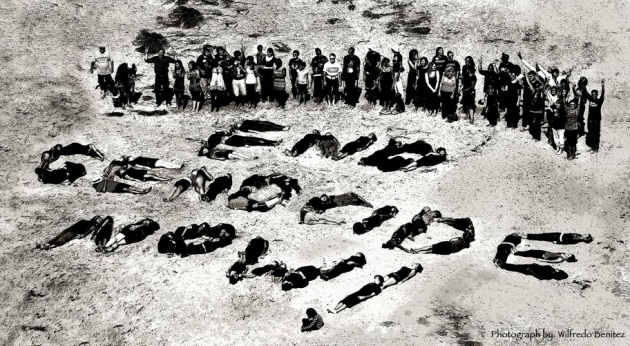
Image: Photograph by Rev. Willfredo Benitez for Orange County