
Pop aesthetics and soundtracks – The Bridgerton Core and Period Dramas
Period dramas have dominated our screens for years; Downton Abbey brought everyone to tears that one Christmas and Pride and Prejudice had everyone rooting for Colin Firth’s Darcy, who made one wrong choice after another. Nowadays, the period piece has become less mainstream and significantly more niche, with shows like All Creatures Great and Small attracting small yet dedicated audiences and fans. For the most part, a period piece has taken on the form of the Bridgerton blueprint; with soundtracks and an aesthetic of textures and bright colours. As a Bridgerton loyalist, I see the hyperfixation as the outcome of palatable aesthetics and the somewhat fictional bubble in which the series is set in.
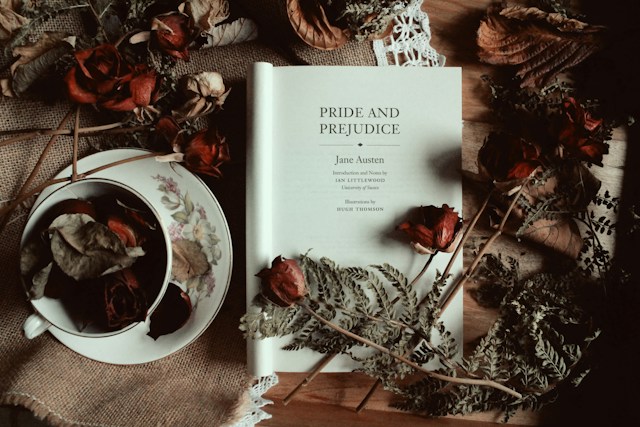
In a landscape scattered with these features, you find the unexpected darling of 2026. It’s another retelling of the Pride and Prejudice story, with the overseen Mary Bennet as its protagonist. By this standard, the The Other Bennet Sister should’ve been brushed aside or forgotten as a mini-series. It doesn’t fit the standard checklist or the aesthetics of the modern period drama craze. But the Rotten Metre and the general influx of Donal Finn (Tom Hayward) and Ella Bruccoleri (Mary Bennet) interviews tells the opposite story. There’s is no grand plot twist or complications and with the mere signs of a love triangle, The Other Bennet Sister manages to stand strong. And while most period dramas are kept alive by copious amounts of side plots and obvious love triangles, this new entry strives on the idea of a coming of self story. Unlike Pride and Prejudice and Bridgerton it takes you away from the manor houses and the Darcy-esque mysteries of the regency era dating scene.
(Re)writing Mary Bennet – From the Wings to Wordsworth
Pride and Prejudice gives you the almost clear cut idea of the Bennet sisters, through stereotypes and overall plot relevancy. Jane is the oldest who has captivated the area, as the girl next door; Lizzie is the relentless wit with a lively flare; Lydia is a teenage fever dream, with a carefree spirit and Kitty is the one who follows her footsteps. Mary is the middle child, with a bookish outlook on life, who is impartial to a spiritual way of life. Her anecdotes come form a girl who is over shadowed and neglected. At times, Mary Bennet is the forgotte one and according to the footnotes of Austen, she is the last of the sisters to get married.
Both the novel and the show The Other Bennet Sister dig into this idea. Mary is practically confined to a life that is entirely different to those of her sisters. Jane sweeps Mr. Bingley off of his feet and Lizzie has the slow burn romance with the last man she had wanted to marry; Kitty and Lydia are at least loved and appreciated by their mother. Mary is pitted against these pairs and left to her own devices. She encounters a failed spark after another, practically perpetuated by the weight of a demolaralising Mrs. Bennet. Every idea that Mary builds up for her is sustained by her mother’s dissatisfaction and you see it engrained into Mary’s life.
There’s something almost unrealistic about the idea of the perfect child on screen. I think of Mary from Downton and a few others; who secure their parents’ love by way of wit or being the first born in a happier time. Then I think of the younger ones; Downton’s sweetheart Sybil and Little Women’s Beth. Even Bridgerton follows this plot with the sisters; Daphne is the picture perfect eldest daugter and Francesca is the spunky one, desperate to make her debut in society. The middle ones, the Amy Marches or the Francesca Bridgertons are largely misunderstood for wanting something a little different or feeling burdened by the weight of all things thrown at them.
Mary isn’t this sister either. She is beyond discarded or forgotten. From the very start of the show, we get the sense that she’s been thrown out of the loop by almost everyone in her family. Her parents don’t care for her and her sisters are too preoccuppied by their own suitors and dances to pay her any attention. From the very start, the idea of of sisterhood, prevelant in Pride and Prejudice is given secondary consideration.
While there is no sisterhood or the perfect idea of this functioning family, the audience gets a taster of one of the most compelling found families brought to screen. After a family tragedy and a move to London, Mary is pulled into a world of intellect, modernity and change, heralded by her her uncle and aunt. Within the span of just a few minutes, Mary is pulled out of the silence and the audience gets to see a character unravel for the better. She finds her own footing away from the weight of her family and learns her own worth in a society that appreciates her.
The Romance is Secondary
The Other Bennet Sister is also a bold departure from the heavily romance centred period pieces and dramas on screen. The story is about Mary’s journey from Merryton to London and her coming to terms with her past and identity. The romance is largely secondary and somewhat supplementary. For the most part, the show dedicates itself to following Mary’s coming of self journey and the friendships and family she finds on her own terms. In a way the Mary the audience sees in London is a complete blank canvas, someone who is both cautious and desperate for change.
The audience gets a small glimpse into Mary’s want for romance; something that comes out of the loneliness of her childhood. And as an audience, we see scattered romances that could have been. The Mary the audience meets craves validation but it’s not something that stems from any romantic connection. She craves that comfort from her family and her pursuit in governessing. This is a flip of the script, somewhat radically different , where romance plays a foundational role in the arcs of characters.
There is still a love story embedded into the series. There is no insufferable Darcy with a superiority complex or a bickering Knightley. Instead, we have Hayward, someone who resembles quintessential Austen yearners like Wentworth. In Hayward, the viewer finds an equal to Mary, someone who overthinks and overcomplicates things in courting. On the flip side, there is Ryder, the reckless but well meaning red herring, who falls for Mary’s unconventionality. They are friends before romantic partners, and secondary to everything. They aren’t glorified relics like Darcy but men that Mary’s befriended as a Londoner. In many ways, its a departure from the usual narrative popularised by Austen but most importantly, it isn’t the only thing that occupies Mary’s storyline.
End Notes – A Love Letter to Wallflowers
I remember finishing the finale of the show, crouched on a kitchen chair, with a bowl of cereal in front of me. There are moments in life that you can’t exactly place or describe and I’d say this fell under that. To me, Mary Bennet represented the change that we experience away from a home that felt less like one and more like a puzzle piece. As someone who spent my first year, barely putting myself out there, Mary was a mirrored picture.
Featured Image: Elaine Howlin via Unsplash