
The New Princeton Encyclopaedia of Poetry and Poetics regards the Lyric as a poetic form which is ‘mechanically representational of a musical architecture’. In its rather restrictive, historical sense, states the encyclopaedia, ‘a lyric was simply a poem written to be sung’. In the context of contemporary music listening, songwriting is not necessarily associated with poetry writing. Yet, I find myself experiencing an increase in appreciation for music if a song’s lyrics come across as having a carefully wrought thematic or formal architecture. A study in 2024 found that song lyrics have become more simple, angry, and self-obsessed in recent years. If we approach lyrics as poetry in the sense of it being highly sophisticated in a linguistic and structural sense, do we run the fearsome risk of losing all enjoyment in music listening? Conversely, should such loss of enjoyment be taken as a revolutionary sign that all songwriting must be held up to a certain standard? Or does production, rhythm, instrumentation, and the meaning formed by them be given precedence in the experience of music listening over what a singer is actually saying? To begin with, poetry in the context of this article refers solely to a certain structural and linguistic arrangement. The definition of poetry is vast and continues to evolve to this day, and any wider discussion will be far too long for the word capacity of this webpage. For our purposes today, the lyric as a poetic form is concerned with the careful crafting of songs’ physical design as words on paper, or on a virtual document. The transition undergone by words on a page to become a song is where the object of this article’s discussion lies – what happens when a song titles itself a poem, or vice versa, and in what ways does it change the way we experience the song?
There is a sense of immortality conveyed by poetry and songwriting in the liminal space between its transition from page to air
We might begin first by looking at a poem which labels itself a song. Christina Rosetti’s She Sat and Sang Away, which is often referred to as ‘Song’, offers an exploration of the power of music in understanding love and loss, society’s expectations of women, and the dichotomy between youthful ignorance and later disillusionment. The speaker seems to lament the singing of her younger self who used to sing by a stream; the same stream by which the speaker now weeps, implying that the poem itself is no longer a song but merely an expression of grief, since the singing has decidedly ceased. The poem boasts an extensive amount of repetition, characteristic of songs. The last line, ‘Her songs died on the air,’ not only denotes the ironic ending of singing in a poem labeled ‘song’, but also connotes that the song had a life both on paper and in the air it ultimately died on. One may then argue that there is a sense of immortality conveyed by poetry and songwriting in the liminal space between its transition from page to air.
We might also look at Abel Meeropol’s Strange Fruit , which began as a poem composed in 1937 about the brutal lynchings taking place in the south of America around the time, and was performed as a song by Billie Holiday in 1939. The gruesome imagery of Meeropol’s poem is brought to life anew in Billie Holiday’s performance of it in an incredibly mournful and moving voice. The performance itself is carried not by over-exaggerated instrumentation, but by Holiday’s voice modulation over the words of Meeropol’s poem. The meaning and quality of the song is, as such, conveyed by the formal design of the words being uttered. We could now take Rosetti’s insistence of the immortality of poetry through song, and Meeropol’s illustration of the inheritance of emotion in the way a piece is arranged, and use them as lenses to view modern-day songwriting as a poetic form. Let’s take Olivia Dean’s A Couple Minutes, which has frequented my headphones much as of late. The pop-soul ballad showcases Dean’s smooth vocal talents, as well as heartfelt songwriting which is characterised by crafty internal rhymes. The mellow and nostalgic atmosphere of the song is influenced by the production and lyrics in equal parts. If we were to compare this to other songs (which I will not name out of regard for other peoples’ tastes and my own safety…) which have lyrics resorting to an absurd amount of profanity, or words which are strung together simply for the sake of using words, Dean’s song may be said to be inherently more artistic by virtue of its poetic lyricism. Excluding instrumental tracks, if we were to regard all music lyrics as poetry and hold them up to a particular historical standard, many songs today would lose their prestige and significance.
Music is and will continue to be a didactic, politically committed, propagandist, and moral art form
This, I think, would be a generally unfair assessment to pass. In the current climate of the daily 9-5 hustle, the academic rigour of various institutions, and the renewed emphasis on listening to music in the background while you carry on with your day, music is increasingly getting recognised and merited based on its technical elements, on its aestheticism and the Pater-ian emphasis on art for art’s sake. Yes, music is and will continue to be a didactic, politically committed, propagandist, and moral art form, but equally the world has come to rely on it as a means of escapism in the current geo-political climate which often gets too heavy to bear. On some level then, all songwriting, regardless of how lyrically sophisticated it is or isn’t, is valuable in the music industry, and in the world more generally. Still, I cannot deny that there is something extraordinary in the art of stringing words together in lyrics with careful design. The beautiful thing about music listening is how individual it is in the subjectivity of perception and opinion that it allows, and by virtue of this beauty, the sophistication of music as an art form is wholly up to interpretation and autonomy of experience.
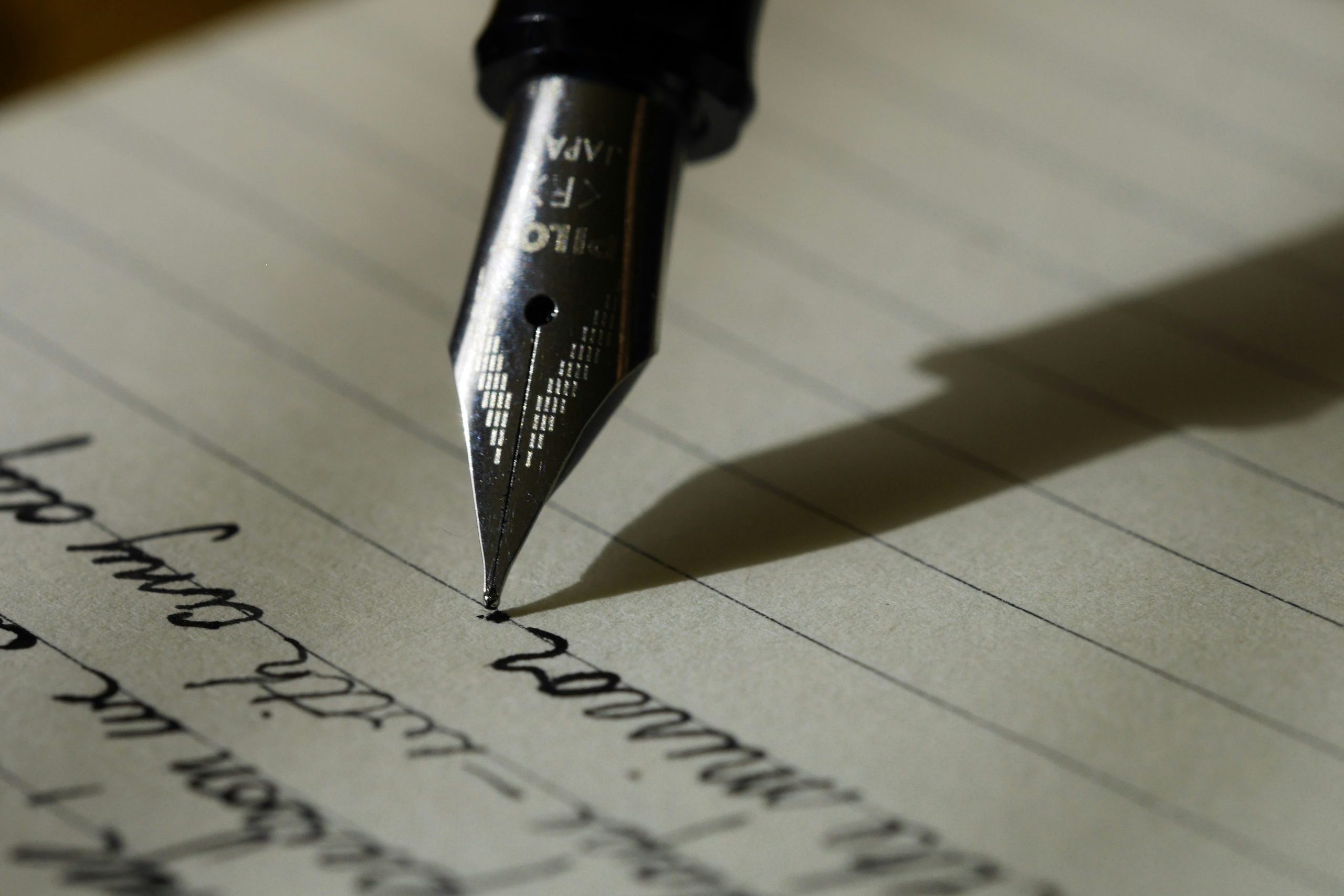
Image: Aaron Burden via Unsplash