
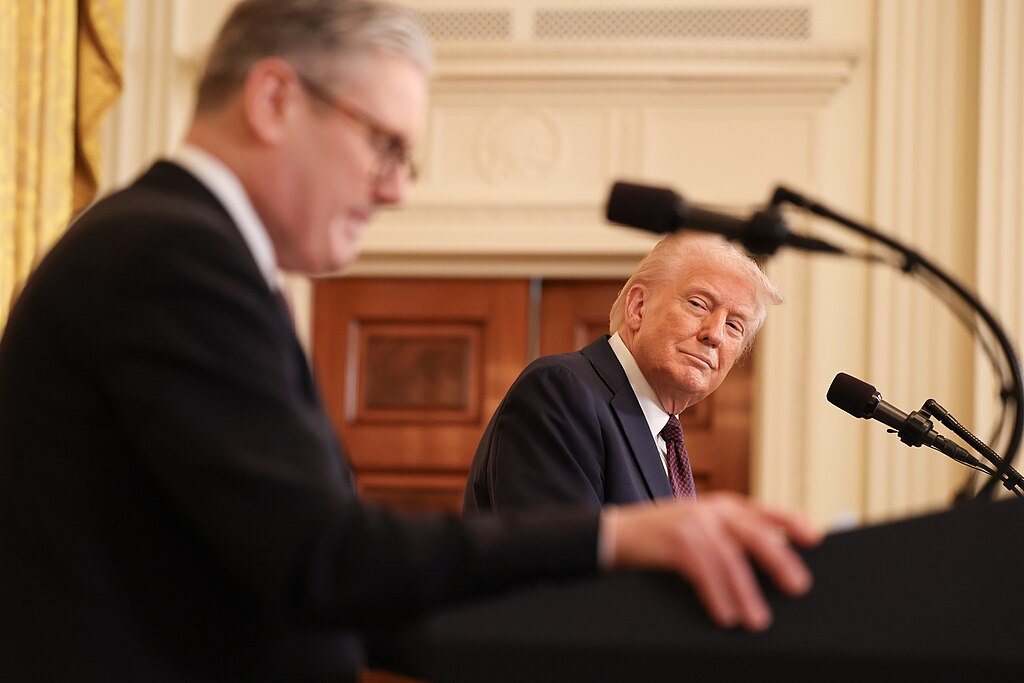
The joint US-Israeli operation ‘Epic Fury’ has killed Iran’s Supreme leader, Ali Khamenei, and has seen hundreds of bombs dropped—and more which continue to do so—in the Middle East. US President Donald Trump and Israeli Prime Minister Benjamin Netanyahu have justified their bombardment by claiming that Iran’s unwillingness to agree to a new nuclear programme poses an existential threat. Trump has called on Iranians to overthrow their government once the US and Israel “are finished.” In clarifying the UK’s position on the attacks, Starmer told MPs in parliament that his government “does not believe in regime change from the skies.” This is the first time Starmer has taken a direct stand against Trump’s foreign policy.
This article will explain why Starmer disagrees with Trump on Iran, the reaction Trump has had to this position, and the rift that has grown between the two leaders as a consequence.
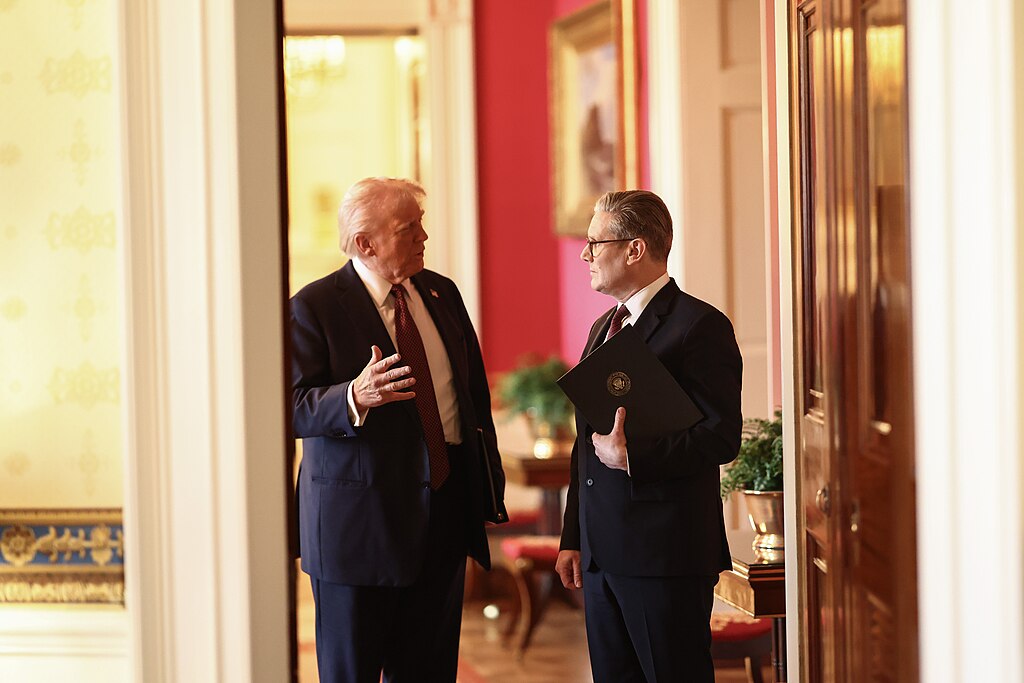
Starmer has tried to distance the UK from the US-Israeli operation for several reasons. Firstly, he is set on avoiding direct UK involvement in what is, for now, taking a similar shape to the conflict in Iraq. Moreover, as a former human rights lawyer, Starmer is against involving the UK in an operation which has been criticised for breaching international law. He also opposed UK involvement in the initial strikes for lack of a concrete plan detailing the end goal of this conflict.
Trump, speaking directly to the British newspaper The Telegraph, expressed his deep disappointment over Starmer’s position on Iran. This level of disagreement is something that he believes “has never happened between our countries before.” This shows Starmer has finally grown a backbone and is taking a stand against Trump—or does it?
Indeed, Starmer made a strong statement in Parliament by opposing UK involvement at present and fervently denying a UK hand in the killing of Khamenei. However, Starmer has gone back on his previous refusal to allow US bombers to use joint UK bases in the Chagos Islands and in Gloucestershire. This is a move most welcomed by Trump, but one he would have wished to see sooner.
Starmer has received criticism from the UK’s leading political parties from both sides of the spectrum— mainly from Reform UK and from the Green Party. On the right, a close ally of Trump, Reform’s Nigel Farage has said that Starmer needs to back America in their fight against the Iranian regime, and that Starmer risks threatening the UK’s “special relationship” with the US. On the opposite side of the spectrum, the Green Party’s Zack Polanski criticised Starmer for not fully standing up to Trump. Starmer is facing competing pressures from all sides on this issue.
With intensifying attacks in the Middle East and British nationals stranded and at risk from indiscriminate bombardment, we have yet to see if Starmer will stand by his condemnation of the US and Israel’s approach, or if he will make more U-turns in how he responds to the conflict.
Image: Number 10 via Wikimedia Commons