
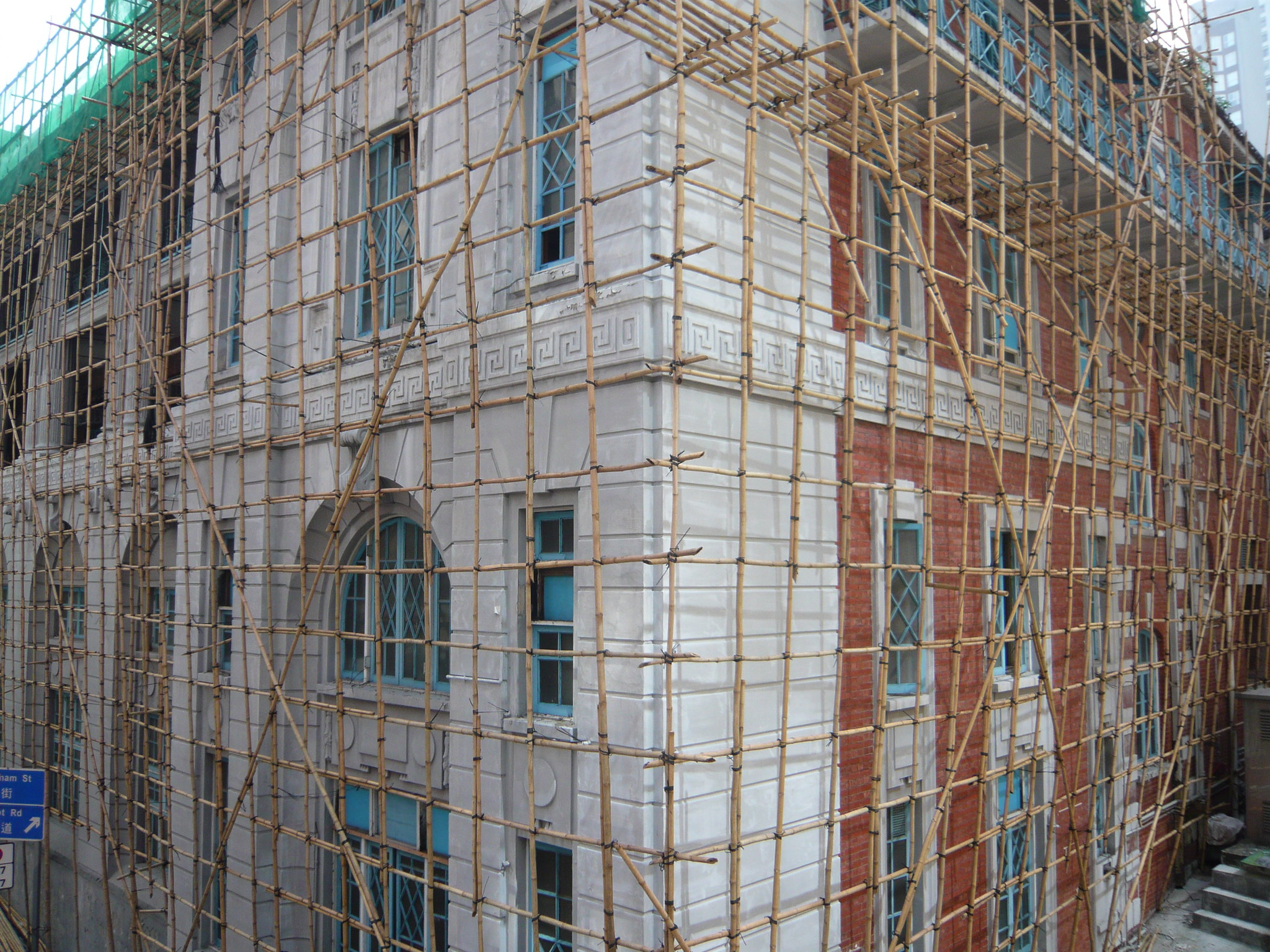
Growing up in Hong Kong, bamboo scaffolding is everywhere. You could walk two streets in any direction and find a building wrapped in those warm, honey-coloured lattices. The scaffolding, paired with the noise of constant construction works, is woven into the city’s DNA and visual identity, part of what made Hong Kong look like Hong Kong.
But the tragic fire in the Wang Fuk Court apartment complex on 26 November changed how the world viewed these familiar structures. Early reports suggested that bamboo scaffolding had helped the fire spread, even though investigations later confirmed that illegally installed, highly flammable nets were the real cause. But by then, images of burning towers wrapped in bamboo had already circulated worldwide. It showed how quickly a misunderstanding forms when an image travels faster the context and knowledge needed to interpret it.
From afar, the bamboo scaffolding looked too raw and unprocessed to be wrapped around high-rises – too simple to belong in a modern skyline. To people unfamiliar with Hong Kong, it appeared ‘primitive’, even unsafe. That surface impression made it easy for outsiders to jump to conclusions before the facts did. But that reaction revealed something deeper than panic and grief. It showed how fragile cultural understanding becomes when a city is judged through images alone, without the knowledge that gives those images meaning. We do not see materials for what they are; we see them through our own expectations.
Bamboo scaffolding, however, has never been an improvised choice. It is a craft honed by si fu who read weight and tension by touch. The structures they build are held together by split nylon ties pulled tight in precise, practised movements, forming lattices that are both lightweight and strong. This is knowledge passed through bodies more than manuals. Many Hong Kongers pushed back against the early accusations because they recognised not just an error, but a threat to a practice already at risk – like the neon signs that once defined the city. Losing the craft would mean losing part of Hong Kong’s identity.

Its presence extends beyond simply construction. Bamboo scaffolding has long appeared in art and architecture. Rocco Yim’s Bamboo Pavilion in Berlin (2000) and William Lim’s West Kowloon Bamboo Theatre (2013) reframed traditional methods as temporary public artworks. Lap-See Lam, among others, uses bamboo in installations exploring memory and heritage. In the Architecture Urbanism Biennale, Siu Man’s Dis-place treated scaffolding as something to move, climb, and perform with. These projects show bamboo shifting between structure and sculptural form – a material language as expressive as it is functional.
Photography has shaped global perceptions of bamboo scaffolding, especially after the fire. Photographer Elaine Li was quick to defend the craft, sharing images from the scene and urging viewers to “leave the bamboo alone”. Her response underscores how editorial photography guides public understanding. Scaffolding alters a building’s silhouette, casts patterned shadows, and frames the city in ways photographers have long used to express Hong Kong’s constant transformation. Through images, bamboo becomes part of the city’s visual vocabulary.
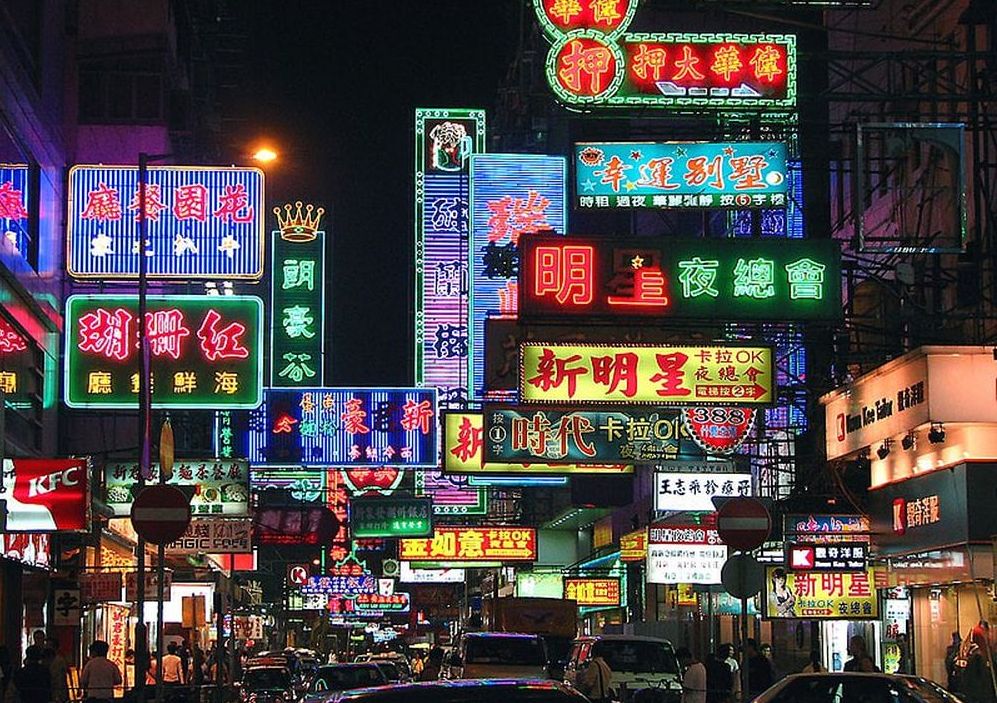
If bamboo scaffolding disappears, Hong Kong loses more than a building method. It loses one of the ways the city sees itself. The lines and grids that once wrapped its surfaces connected past to present, construction to culture. When such symbols are lost, they take part of the city’s character with them. Many artists and residents feel this criticism strongly because these cultural symbols have already started to fade, like the neon signs that once filled the streets and served as a visual representation of Hong Kong. When a material carries this much history and meaning, its removal affects more than construction. It removes part of the city’s character and the visual language through which people understand Hong Kong.
When I think about Hong Kong, I often picture the bamboo lattices I grew up with. They were ordinary, almost invisible, yet they shaped how I recognised the city. The fire and its aftermath showed how easily something familiar can be misread once it is seen without context. To see bamboo scaffolding truly for what it is is to see Hong Kong clearly. Bamboo scaffolding has never only supported buildings; it has supported the very images through which Hong Kong recognises itself.
Image: “Bamboo scaffolding” by kfcatles, CC BY-NC-SA 2.0