
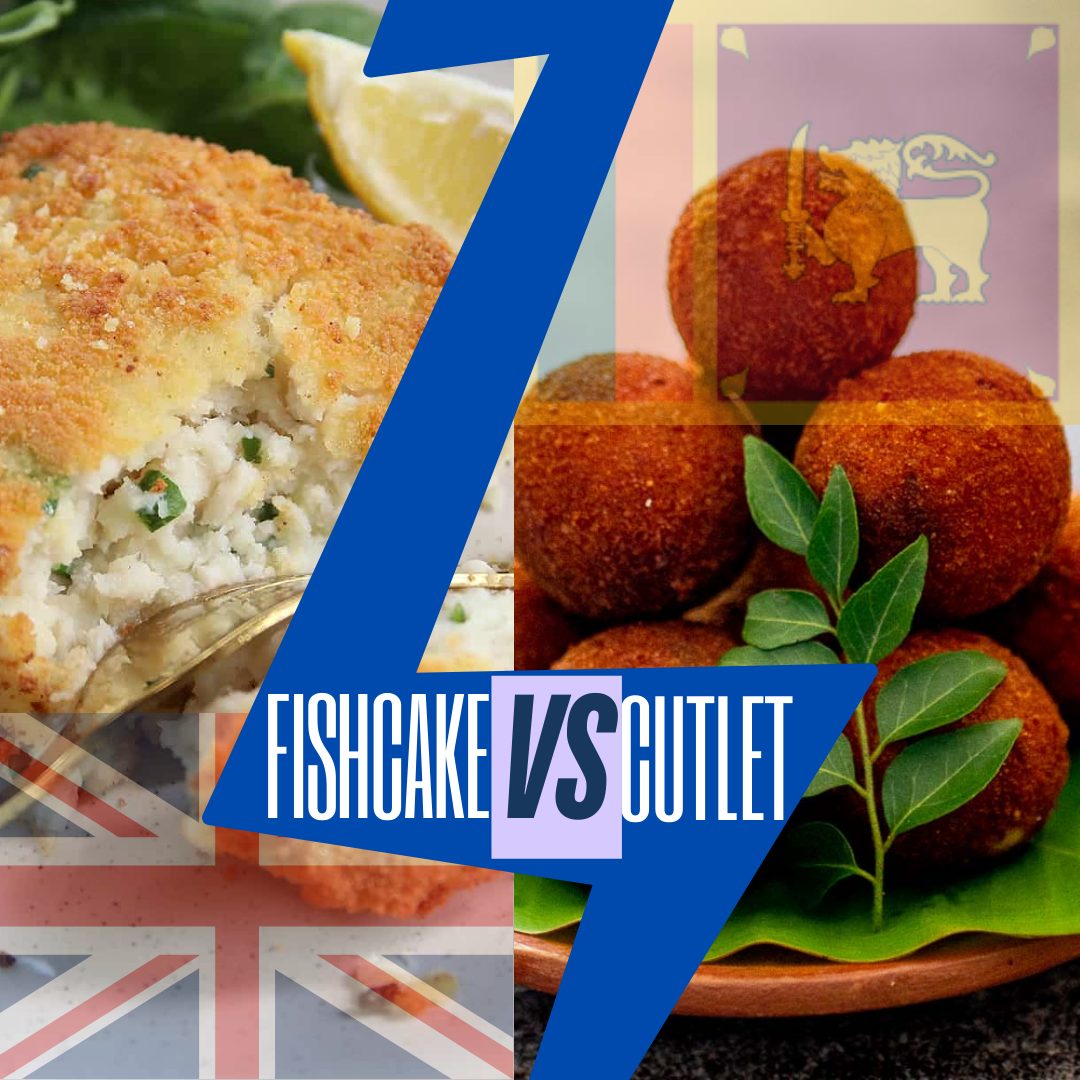
Picture this: a diplomatic table set in the heart of Durham, two fried dignitaries taking their seats. On one side sits the British fishcake – pale, polite, bravely seasoned with… salt. On the other, perched proudly on a doily like a tiny deep-fried monarch, is the Sri Lankan cutlet: spherical, golden, radiating heat (real heat). I have brought these two to settle a question I’ve carried since childhood: why exactly does the Sri Lankan cutlet absolutely outshine its British counterpart?
Round 1: Texture Tensions
The fishcake speaks first. Soft, it says. Comforting. Dependable. A warm Friday-night memory bundled in breadcrumbs. To give credit, the fishcake has a quiet honesty to it – you always know exactly what you’re getting, no surprises. I nod respectfully.
The cutlet steps forward to deliver its rebuttal. That first bite is like a mini thunderclap. The shell gives way to something simultaneously fluffy and fiery: potato stitched with chilli and onion, tinned fish, a squeeze of lime, a scatter of pepper – textures that clash and flirt and somehow get along. If fishcake is familiar, then a firework of flavours is the only way to describe a cutlet.
Round Two: Seasoning Showdown
Here, fishcake struggles. It tries its best, bless. It explains the beauty of subtlety: the quiet dignity of mashed potato, the gentle hum of white fish, the hint – yes, a whole hint – of parsley. That’s the thing about the classic British fishcake: born in Victorian chip shops as a clever way to use up leftover fish, its flavour philosophy has always leaned toward frugality.
The cutlet, however, is built on Sri Lanka’s unofficial motto: season boldly or go home. And there’s a history behind that confidence – Sri Lankan cutlets are tiny ambassadors of the island’s spice identity, shaped in family kitchens where chilli quantity is measured not by teaspoons but by intuition and ancestral memory. A cutlet is a miniature spice curriculum: heat, tang, warmth, and comfort. It is both a bite and a statement.
Even the fishcake looks impressed.
Round Three: Versatility & Vibes
The fishcake preaches tradition – the chip-shop charm, the seaside nostalgia, dinner with peas. Again, valid points. The true British food culture is incomplete without the quintessential fishcake. It doesn’t demand attention; it simply shows up, says “evening, love,” and fills you up without drama. It is the culinary embodiment of a supportive text message.
But the cutlet merely smiles, for versatility is its home turf. Sri Lankan cutlets turn up everywhere: from train rides to birthday parties, from office meetings to aunties’ living-room tables, the bestsellers at every sports meet, the whispering from your fridge at 11pm when you should be studying/sleeping. Every region has its own slight twist: more lime on the coast, more chilli inland, tuna swapped for mackerel depending on the catch of the week. They belong everywhere. They belong to everyone. They can burn your lips slightly and still make you reach for another. Sure, you’d insist that this would be ‘the last one, the last one’…but you said that five cutlets ago.
The British fishcake is a meal.
A Sri Lankan cutlet is a lifestyle.
Closing Remarks
In fairness, the fishcake holds its ground. I’d never turn down one on a cold Durham evening, and its place in British comfort-food history is safe.
But my loyalty lies with that spherical miracle of spice and potato engineering. The cutlet isn’t just a snack – it’s an edible snapshot of what a Sri Lankan kitchen is: flavour-forward, a tad chaotic, proudly over-seasoned, and joyfully incapable of toning itself down.
Every diplomat must admit when the room is tilted. So, with great respect and minimal impartiality, I declare the Sri Lankan cutlet the winner of this summit. The fishcake nods in gracious defeat, because deep down it knows: in the realm of fried comfort, the cutlet doesn’t just show up.
It steals the spotlight, eats the script, and walks of humming its own theme song.
Case closed. Spice wins.
Featured Image: on Proper British Fischake, Kannama Cooks
This juxtaposition of the “pale, polite” British fishcake against the “spherical, golden” Sri Lankan cutlet is brilliant! I’m immediately intrigued by the implied flavor contrast. Did you find that the cultural diplomacy extended to the accompanying sauces, or was the focus purely on the fried entities themselves?