
For a seemingly simple hobby that is often looked down upon by the outside world, gaming can be surprisingly intense – gun-game adrenaline, visual novel nerves, or even the end of season jitters in farming sims are all impossibly cortisol-spiking. A lot of this fear and panic can often arise from feeling unprepared or vulnerable. Players often feel out of their depth, and end up relying on the internet or Wikipedia to prepare themselves before playing, but I’d argue that indulging in that raw panic and emotion is what differentiates gaming from any other form of media – secondary sources can often act as barriers between us and the message the experience the game is trying to communicate.
Open world games like Skyrim, Baldur’s Gate, Red Dead Redemption or The Witcher can often leave players feeling overwhelmed by the many possible directions to choose from, effectively paralysed by choice. When you don’t know how to begin, the simplest option is just closing the game (which is why I personally have so many unstarted games gathering dust in my Steam library). In a genre that tries to be as freeing as life itself, it is no wonder players may feel estranged from the new world they have been transplanted into, especially if they have no prior experience within the genre, leading to a reflexive creep towards Google. I found myself in this exact situation when I decided to pick up Skyrim: The Elder Scrolls V over the summer holidays. I was essentially going in blind, with no knowledge of the game’s mechanics, the importance of class/ race synergy or even what Solstheim was (which is how I found myself battling a very powerful Dragon Priest at a very meek Level 12). Very much so a Wikipedia-gamer before this point, I was not expecting to have this much fun going in blind to such a massive game, but learning how to navigate NPC interactions, dungeon crawls and plot/ subplot movements on my own was such a revelatory feeling. It really made me reflect on the true purpose of gaming. Is it to walk in someone else’s footsteps when unsure, replicate someone’s exact build and play style, or spend ages reading various subReddits and online guide pages before I made any independent decisions at all? My conclusion was surely not. Not to suggest that playing in alignment with dev intent is necessary to fully enjoy a game, but perhaps players need to start relying more on their own intuition and allowing the natural landscape of the game to guide them in the choices they make, rather than following game guides to the letter or calculating min-max damage output.
I think this kind of thinking is particularly important when navigating first playthroughs, so that players can form their own individual relationship to the game before following a secondary route e.g. being a Cookie Clicker completionist or Joja route villain. Fellow gaming editor, Oscar Ryley wrote a fantastic piece (https://www.thebubble.org.uk/lifestyle/perfectionism-and-achievements/) last year discussing the appeal behind the challenge of pushing these games to their farthest extents and ‘100%’-ing games to collect all possible achievements. He crucially notes that playing solely to get to a specific end point of pre-defined ‘completion’ can lead to the imposition of ‘blinkers’ on your playstyle. The implication is that if you can only see the game in observable, metric terms you will inevitably become removed from the emotional or thematic aspects of the game, or even just inhibit yourself from the very base excitement of natural exploration and progression, which is what makes gaming unique in the first place.
Solving puzzles by yourself (or brute forcing them when you can’t find the solution), or seeing the natural consequences of your actions is highly rewarding, especially in games with high emotional stakes, like Until Dawn. Even games that aren’t necessarily open world, such as acclaimed strategy roguelike Balatro, invite the use of trial and error to figure out the mechanisms to victory. Navigating the game from the ground up can often leave you feeling more proud of yourself than if you were to begin the game with prior knowledge.
Many say that the aforementioned “crowning glory” of indie games, Stardew Valley, is impossible to understand without the Wiki, and while that may be true, surely more fun is accrued from following the game’s natural course of progression, and organically finding the loved gifts of all your favourite townies or spontaneously uncovering the titular secrets of the Secret Notes. Playing up & coming Harvest Moon inspired farming sim, Fields of Mistria, has opened my eyes to what playing Stardew blind could be like. Finding the highest earning crop of each season, combatting the monstrous threats within the caves and locating all the different treasures without consulting any third party sources really cemented the game as an experience rather than a time-test. I personally love the rigidity and dopamine planning and executing a flawless in-game fiscal season can provide, but playing that way consistently can be incredibly draining, and really detract from your overall playthrough.
To conclude, I’d like to offer three games I would recommend going in completely blind for:
1 – Inscryption
https://store.steampowered.com/app/1092790/Inscryption
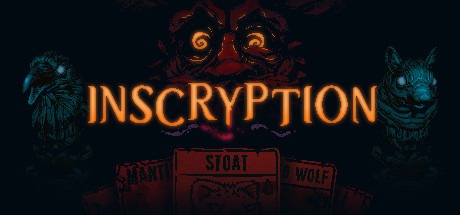
Inscryption is multi-media and multi-genre frenzy. I thoroughly enjoyed dabbling in both cardplay and puzzle solving while chasing the greater mystery at hand, which the player slowly pieces together across several very well paced arcs. Coupled with breathtaking and diverse visuals, and an impressive original soundtrack by Jonah Senzel (which is always playing while I study), Inscryption is absolutely a game you should go in blind for.
2 – Strange Horticulture
https://store.steampowered.com/app/1574580/Strange_Horticulture
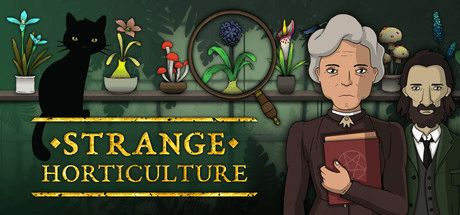
A very classic and very simple point and click plant-based mystery solving puzzle with multiple endings. I would absolutely recommend muddling through this intricate and lovingly made game (with an unbeatable atmosphere) where you find, label and give out various flowers and fungi to the sometimes sinister citizens of Undermere. This one is pretty clear on your choices mattering so understand your actions will have consequences.
3 – Dressmaker

https://store.steampowered.com/app/4019220/Dressmaker
Dressmaker is only a couple months old, but is packed with love and care. This is a game about designing and sewing dresses for the eccentric townies of the village you’ve just moved to as their new dressmaker (you would never have guessed). You are given full creative control to make whatever couture you desire as long as you satisfy the whims of your wide customer base. Adversely, I’d suggest engaging with the online community for this one in small doses, as while inspiring, seeing the dresses other brilliant artists have made is a double-edged sword. Comparison is the killer of creativity, so as long as you are proud of the dresses you’ve sewn, it shouldn’t matter.
Image Credits: Juliano 324 via Flickr