
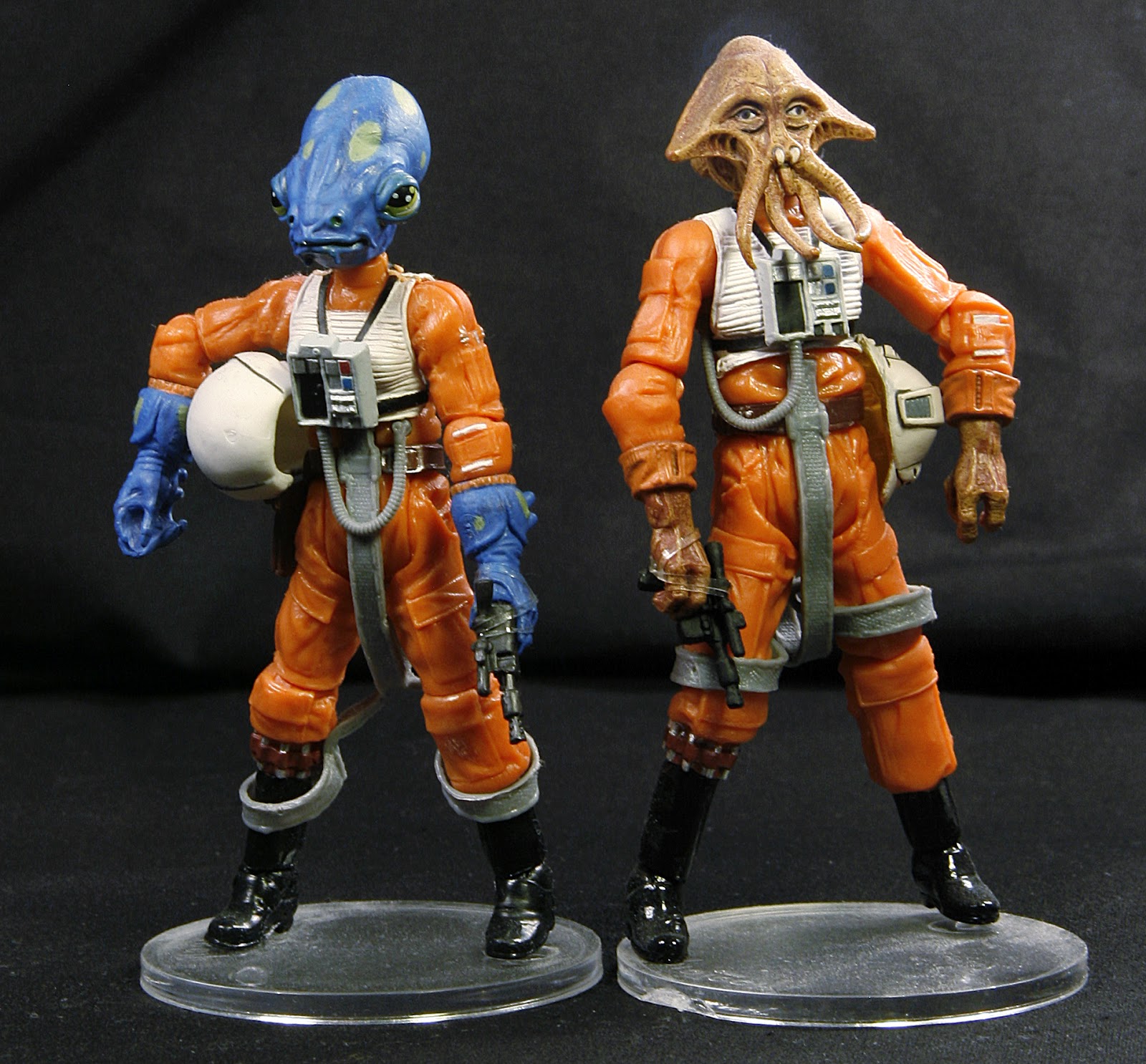
Nrin Vakil is a Quarren – a “squid-head” – from the ocean planet of Dac (alternatively: Mon Cala). Meanwhile, Ibitsam is a Mon Calamari – a “fish-head” – also from Dac. With these characters, Michael Stackpole writes a moving story between two people who initially struggle to cooperate due to cultural prejudices but eventually find belonging together. Their story asks us to question our interpersonal assumptions, particularly those assumptions rooted in culture or history, and recognise others as individuals, not merely as dogmatic representations of their cultures or their pasts. At the end of this article, this idea will be developed further by applying it in a historical context: the fall of Byzantium.
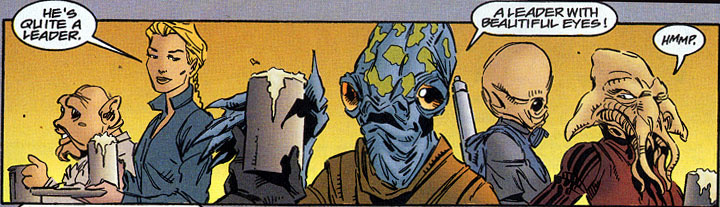
“They’re either going to kill each other, or take the union vow.”
- Feylis Ardelle[1]

The pair’s early conflicts have little to do with Quarren-Calamari prejudices. Later, they disagree over Eiattu’s government, as Nrin favours noble-led rule, while Ibitsam recognises the grievances of the Eiattu rebels and their pursuit of a “new age of freedom.”[2]
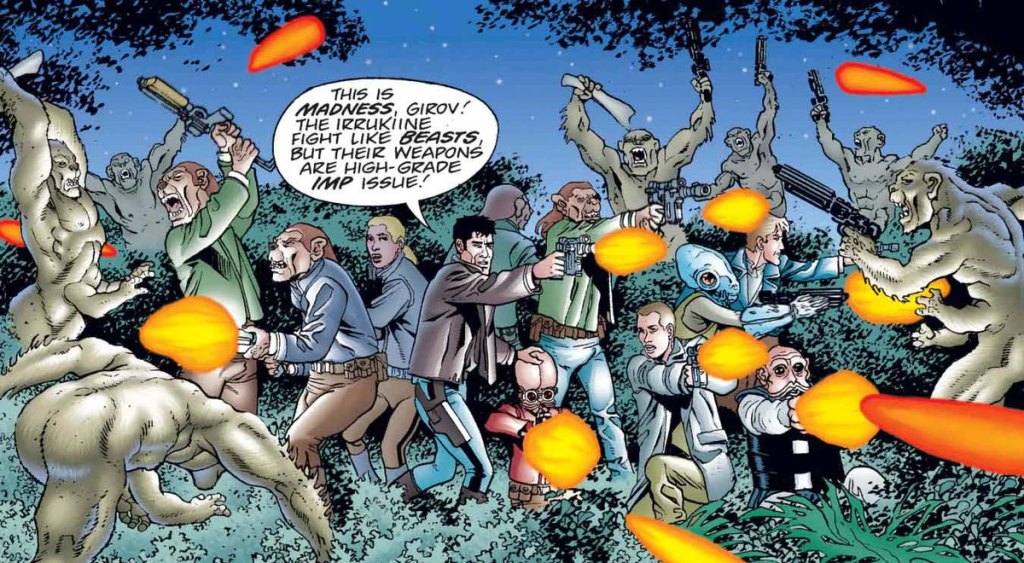
“Your loss would be felt…most keenly.”
- Ibitsam[3]

The following story delves far more into Quarren-Calamari tensions. Ibitsam teases Nrin for his “Quarren self-control” when he is displeased by the “debauchery”/sexual promiscuity of the Bothan women they are billeting with. While her comments may be playful, there is a casual prejudice in how she describes Quarren self-control, tying his personality into his cultural background. During a later Force dream, she makes further sweeping comments about the ideological stiffness of the Quarren.[4]
The Force dream introduces the ideological conflict between the Quarren and the Calamari. In the dream, Nrin proclaims to a Quarren crowd that the Calamari’s “reckless spacefaring” has brought “unnecessary risks” to Dac. He declares, “Tradition must be our guide, not impulse!”, which Ibitsam criticises: “If [Nrin] had his way, we’d never have left the ocean!” Despite these ideological tensions, in Ibitsam’s reflections on the dream, there is an emerging respect for Nrin, particularly his charisma, and some embarrassment for her generalisations of the Quarren.[5]
By the story’s end, the two begin reconciling their prejudices. Before the final battle, Ibitsam tells Nrin, “Your loss would be felt…most keenly,” clearly worried for his safety; he reciprocates the gesture, showing a mutual care and understanding. However, Ibitsam refers to Nrin as “Quarren” and he refers to her as “Calamari”, which may suggest they still view each other primarily through the cultural lens.[6]
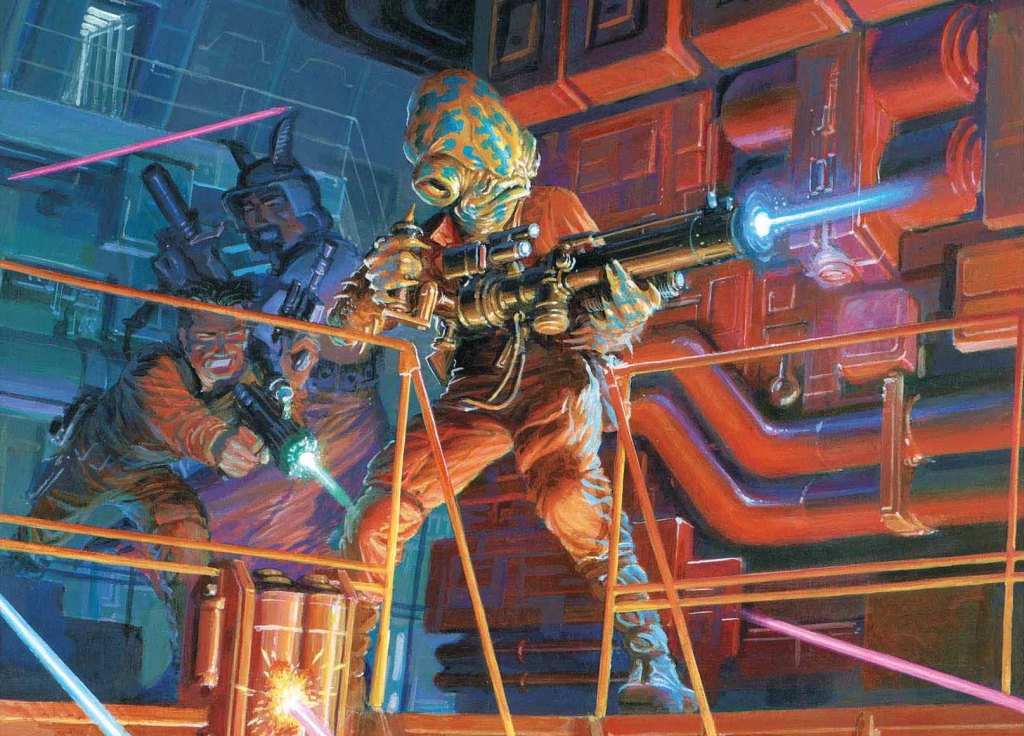
“Her species went starfaring and brought the Empire down upon us.”
- Nrin Vakil[7]

The turning point of Nrin’s and Ibitsam’s relationship comes when Ibitsam is stranded behind enemy lines. Nrin is confronted by Koyi Komad, who senses he misses the Calamari, though he still grapples with his inherited prejudice towards her species (see above). As Koyi points out, though, “[Ibitsam] should be treated as a friend, regardless of her species,” and that he cannot assign the collective blame of Calamari history onto her. This is an important moment, as it shows Nrin’s growth and his progress to understanding Ibitsam as an individual, influenced but not defined by her culture.[8]
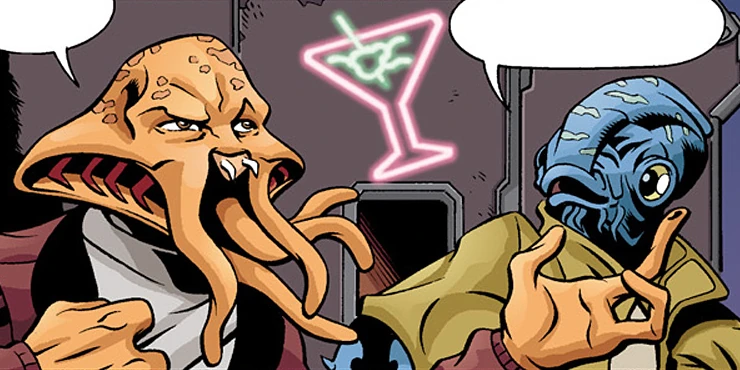
“Our people do not get along, but we don’t have to be our people, do we?”
- Ibitsam[9]

Masquerade highlights the budding relationship between Nrin and Ibitsam. Ibitsam’s quote (above) is the thesis of their new relationship, that the individual may be linked to their culture, but their culture does not determine who they are. Nrin agrees, assuring her they can “rise above old rivalries”, with an implicit criticism of the historic prejudices that have divided the Quarren and Calamari.[10]
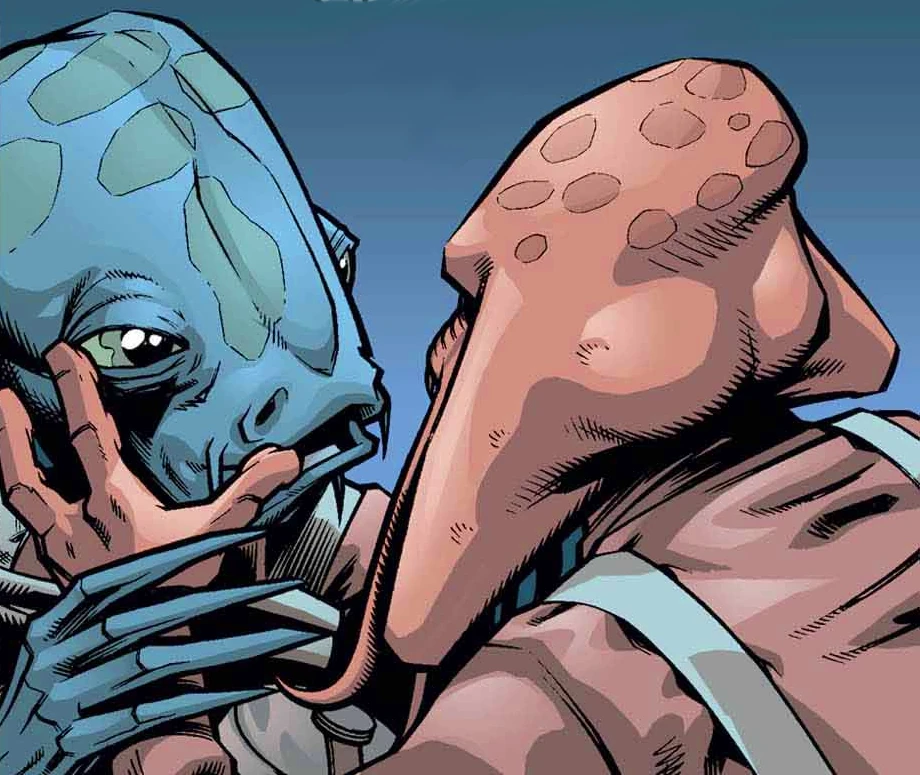
“Remarkable that two people of species that despise each other can form a bond?”
- Nrin Vakil[11]

The relationship between Nrin and Ibitsam takes an ambitious turn, as Nrin proposes they return to Dac as equals and show the rest of the Quarren and Calamari that reconciliation is possible. Here, there is a desire to rectify the mistakes of their forebears and ‘enlighten’ their fellow peoples beyond mere grudges.[12]
A crucial moment is when Nrin threatens to kill Sate Pestage, an ungrateful and xenophobic Imperial leader who Ibitsam dies protecting. This highlights the strength of their bond – and is especially tragic, considering the pair’s ambitions. The tragedy is amplified by Pestage’s disregard of Nrin and Ibitsam both, simply as nonhuman “animals.” However, what is most interesting is the conversation followingNrin’s threat.[13]
Nrin talks with Soontir Fel, a fellow squadron-mate he mistrusts, despite Fel’s valiant service to Rogue Squadron, because of his former allegiance to the Empire. Despite his relationship with Ibitsam, Nrin is not entirely free from inherited assumptions: the Empire has always been the enemy, so Fel is the enemy. Such assumptions are understandable, given the Empire’s past, but should not be treated as unerring gospel. In later stories, the Empire (known as the “Imperial Remnant”) would become a key ally of the New Republic, highlighting the fluidity of factional and cultural identities. Present identities are influenced by the past but are not determined by it. Clinging to a historical status quo risks perpetuating inherited prejudices. In a way, his prejudice towards the Empire mirrors the historical prejudices of the Quarren against the Calamari.[14]
This message is relevant beyond Star Wars. Cultural prejudices can be a barrier to understanding. Moving past historical and inherited grievances and assumptions is essential if we are to see our fellow human beings as whole individuals; otherwise, we limit ourselves to a shade of them, a perception of them made only through certain lenses. Culture and history shape us, but as a part of a larger whole, not as the sole determining factor.
Applying this to our world history, the work of Donald M. Nicol demonstrates how the fall of the Byzantine Empire in the fifteenth century was shaped not only by the various civil wars between the Byzantine leaders, but also by cultural differences between the Byzantines (who followed the Orthodox Church) and the Latinists (who followed the Roman Catholic Church). Despite the requests of Byzantine Emperors, the Latin West was reluctant to involve itself in liberating Byzantium from Ottoman rule, largely due to cultural differences in Latinism and Hellenism, as well as religious differences between the Orthodox and Roman Catholic Churches. In particular, Nicol highlights the 1438-39 Council of Ferrara-Florence as particularly demonstrative of cultural stubbornness between the Byzantines and the Latinists. What could have served as a demonstration of European and Christian unity, resolving the Great Schism and uniting Eastern and Western Europe, was instead marred by protracted theological disagreements, particularly on the Holy Trinity. In this way, Nicol demonstrates how cultural differences contributed to (though did not solely determine) the fall of Byzantium.[15]
Returning to Star Wars,I leave you now with a final quote from the eulogy at Ibitsam’s funeral, delivered by Wedge Antilles, Rogue Squadron’s leader:
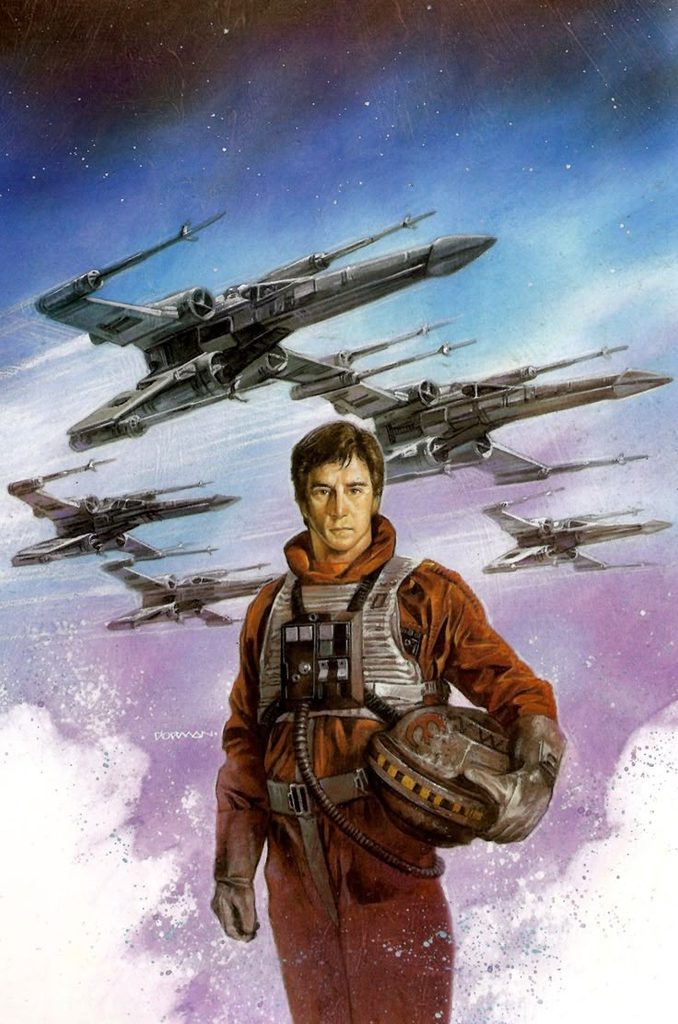
“Ibitsam’s huge heart let her look past the prejudice that poisons the Empire and search for a new and beautiful future…
“What made Ibitsam a Rogue was her willingness to accept danger because the payoff of freedom for others was more than worth it…
“So to you, Ibitsam, and all our comrades, farewell. Though our struggle with the Empire continues, you brought it much closer to an end…
“May the Force always be with you.”[16]
If you are interested in reading the X-Wing: Rogue Squadron comics, the series was available digitally via Marvel Unlimited. It should be available on the Marvel Comics App, once that launches 16/11. The most readily available print version is in Epic Collection: New Republic Volume 2 and Volume 3.
References
- Scott Tolson, Michael A. Stackpole, John Nadeau et al, (2006, orig. 1996-97), “The Warrior Princess”, in Michael A. Stackpole et al, Star Wars Omnibus: X-Wing Rogue Squadron Volume 2, (Dark Horse Books: Milwaukie). ↩︎
- Scott Tolson, Michael A. Stackpole, John Nadeau et al, (2006, orig. 1996-97), “The Warrior Princess”, in Michael A. Stackpole et al, Star Wars Omnibus: X-Wing Rogue Squadron Volume 2, (Dark Horse Books: Milwaukie). ↩︎
- Jan Strnad, Mike W. Barr, Michael A. Stackpole, Gary Erskine, et al, (2006, orig. 1997), “Requiem For A Rogue”, in Michael A. Stackpole et al, Star Wars Omnibus: X-Wing Rogue Squadron Volume 2, (Dark Horse Books: Milwaukie). ↩︎
- Jan Strnad, Mike W. Barr, Michael A. Stackpole, Gary Erskine, et al, (2006, orig. 1997), “Requiem For A Rogue”, in Michael A. Stackpole et al, Star Wars Omnibus: X-Wing Rogue Squadron Volume 2, (Dark Horse Books: Milwaukie). ↩︎
- Jan Strnad, Mike W. Barr, Michael A. Stackpole, Gary Erskine, et al, (2006, orig. 1997), “Requiem For A Rogue”, in Michael A. Stackpole et al, Star Wars Omnibus: X-Wing Rogue Squadron Volume 2, (Dark Horse Books: Milwaukie). ↩︎
- Jan Strnad, Mike W. Barr, Michael A. Stackpole, Gary Erskine, et al, (2006, orig. 1997), “Requiem For A Rogue”, in Michael A. Stackpole et al, Star Wars Omnibus: X-Wing Rogue Squadron Volume 2, (Dark Horse Books: Milwaukie). ↩︎
- Michael A. Stackpole, John Nadeau, et al, (2007, orig. 1997), “In The Empire’s Service”, in Michael A. Stackpole et al, Star Wars Omnibus: X-Wing Rogue Squadron Volume 3, (Dark Horse Books: Milwaukie). ↩︎
- Michael A. Stackpole, John Nadeau, et al, (2007, orig. 1997), “In The Empire’s Service”, in Michael A. Stackpole et al, Star Wars Omnibus: X-Wing Rogue Squadron Volume 3, (Dark Horse Books: Milwaukie). ↩︎
- Michael A. Stackpole, Drew Johnson, Gary Hall et al, (2007, orig. 1998), “Masquerade”, in Michael A. Stackpole et al, Star Wars Omnibus: X-Wing Rogue Squadron Volume 3, (Dark Horse Books: Milwaukie). ↩︎
- Michael A. Stackpole, Drew Johnson, Gary Hall et al, (2007, orig. 1998), “Masquerade”, in Michael A. Stackpole et al, Star Wars Omnibus: X-Wing Rogue Squadron Volume 3, (Dark Horse Books: Milwaukie). ↩︎
- Michael A. Stackpole, Steve Crespo, John Nadeau et al, (2007, orig. 1998), “Mandatory Retirement”, in Michael A. Stackpole et al, Star Wars Omnibus: X-Wing Rogue Squadron Volume 3, (Dark Horse Books: Milwaukie). ↩︎
- Michael A. Stackpole, Steve Crespo, John Nadeau et al, (2007, orig. 1998), “Mandatory Retirement”, in Michael A. Stackpole et al, Star Wars Omnibus: X-Wing Rogue Squadron Volume 3, (Dark Horse Books: Milwaukie). ↩︎
- Michael A. Stackpole, Steve Crespo, John Nadeau et al, (2007, orig. 1998), “Mandatory Retirement”, in Michael A. Stackpole et al, Star Wars Omnibus: X-Wing Rogue Squadron Volume 3, (Dark Horse Books: Milwaukie). ↩︎
- Michael A. Stackpole, Steve Crespo, John Nadeau et al, (2007, orig. 1998), “Mandatory Retirement”, in Michael A. Stackpole et al, Star Wars Omnibus: X-Wing Rogue Squadron Volume 3, (Dark Horse Books: Milwaukie). ↩︎
- Donald M. Nicol, (1972), The Last Centuries of Byzantium, 1261-1453, (London: Rupert Hart-Davis). ↩︎
- Michael A. Stackpole, Steve Crespo, John Nadeau et al, (2007, orig. 1998), “Mandatory Retirement”, in Michael A. Stackpole et al, Star Wars Omnibus: X-Wing Rogue Squadron Volume 3, (Dark Horse Books: Milwaukie). ↩︎
Featured image: https://kishometeora.blogspot.com/2012/08/ibtisam-and-nrin-vakil-action-figures.html